Loading Water Pump Technology
Loading Water Pump Technology
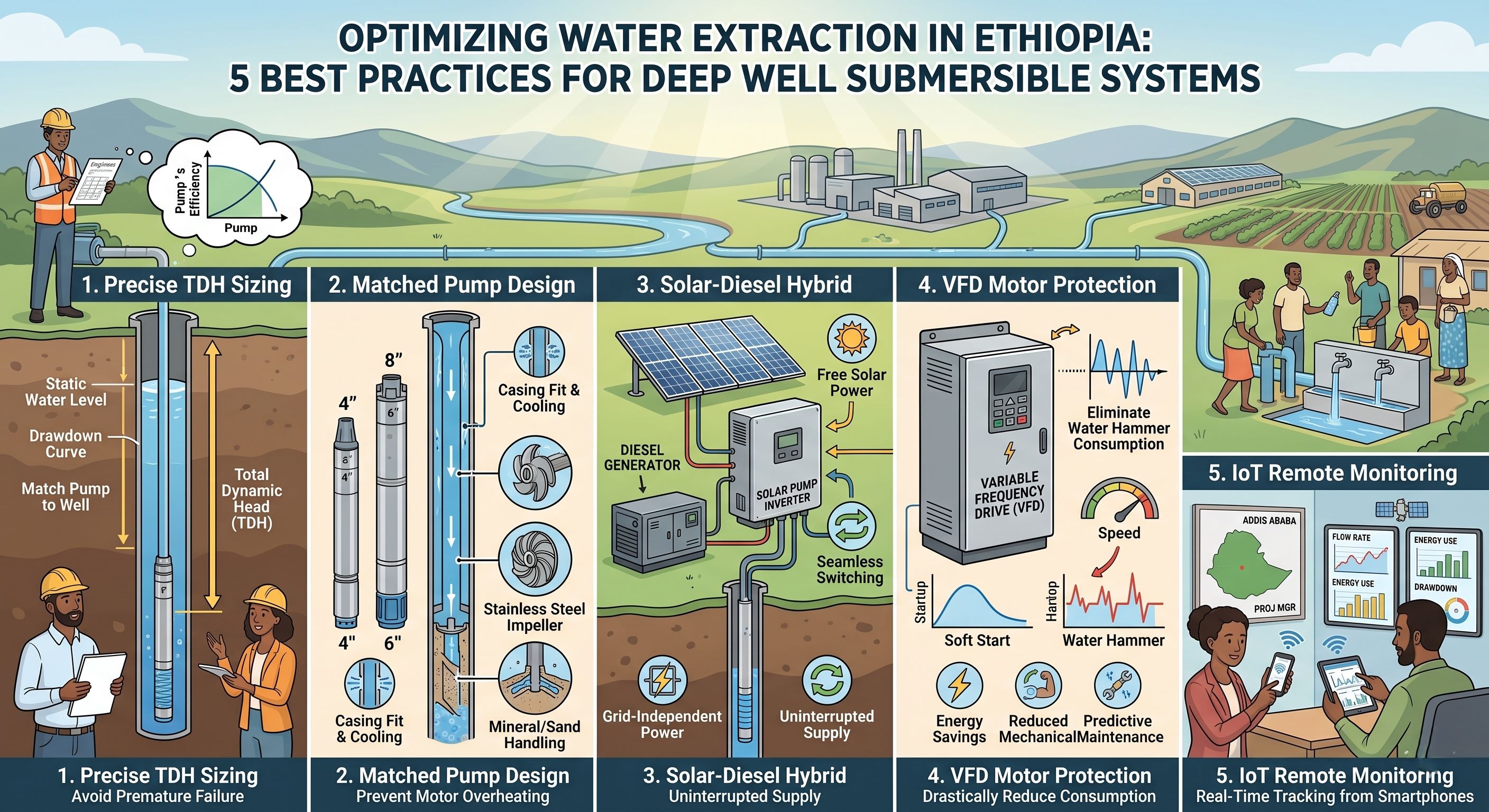
Here are the best practices for optimizing deep well water extraction across Ethiopia's diverse landscapes.
The most common cause of premature pump failure is incorrect sizing. A pump forced to operate outside of its optimal efficiency curve will consume excess power and burn out its motor. Before selecting a submersible pump, you must calculate the precise Total Dynamic Head (TDH). This includes:
Not all submersibles are created equal. You must match the physical dimensions and hydraulic capabilities of the pump to your casing size and water demand.

Grid instability and the logistical costs of diesel can cripple a water project. The most optimized water extraction systems today utilize hybrid power architectures. By deploying high-efficiency AC Submersible Pumps paired with intelligent Solar Pump Inverters, you can run your extraction system on free solar energy during the day, while maintaining the flexibility to seamlessly switch to a diesel generator during extended overcast periods or nighttime emergencies.
The sudden surge of electricity required to start a large AC submersible motor places massive mechanical stress on the pump shaft and electrical stress on the grid. Installing a Variable Frequency Drive (VFD) provides a "soft start," gradually ramping up the motor's speed. This virtually eliminates water hammer in your pipes, significantly extends the life of the pump motor, and drastically reduces energy consumption when full flow is not required.
In remote Ethiopian locations, you cannot afford to wait for a physical inspection to realize a pump has stopped working. Modern submersible setups should integrate remote IoT (Internet of Things) monitoring. This allows project managers in Addis Ababa to track flow rates, energy consumption, and well drawdown in real-time from a smartphone, predicting maintenance needs before a catastrophic failure occurs.